headlight system error see owners manual
Understanding Headlight System Errors & Your Owner’s Manual
Navigating headlight issues starts with your vehicle’s manual; it details fuse locations and system specifics for accurate diagnostics and repair procedures.
The Importance of Consulting Your Owner’s Manual
Your owner’s manual is the primary resource for understanding your vehicle’s specific headlight system. It provides crucial information, including detailed diagrams of fuse box locations and the corresponding fuse numbers for your headlights.
Identifying the correct fuse is paramount; the manual clearly lists which fuse controls the low beam headlights, enabling a quick inspection for blown fuses. Beyond fuses, the manual outlines the headlight system’s components and their functions, aiding in troubleshooting.
Understanding the system’s layout helps pinpoint potential issues, whether it’s a faulty relay or a problem with the headlight switch. Ignoring the manual can lead to misdiagnosis and unnecessary repairs. Always refer to it first before attempting any electrical work, ensuring safety and accuracy throughout the process.
Common Headlight Failure Reasons
The most frequent cause of headlight problems is a burned-out or failing bulb, often due to normal wear and tear. However, several other factors can contribute to headlight malfunctions. Corrosion, cracks, and discoloration on the bulb itself are telltale signs of impending failure, requiring immediate replacement.
Electrical issues are also prevalent, including faulty relays or a malfunctioning headlight switch. These components control the power supply to the headlights, and a failure can result in complete darkness. Dimming headlights, particularly when idling but brightening with acceleration, often indicate a voltage drop or a failing alternator.
Loose connections at the bulb socket can also disrupt the electrical circuit, preventing the headlights from functioning correctly. Regularly inspecting bulbs and connections is crucial for preventative maintenance and ensuring optimal visibility.
Troubleshooting Steps: Initial Checks
Begin by visually inspecting the bulbs for damage, then confirm the connector is securely attached; finally, verify the headlight fuse’s integrity.
Checking the Headlight Bulb for Damage
A crucial first step in diagnosing headlight problems involves a thorough visual inspection of the bulb itself. Carefully examine the glass enclosure for any signs of cracks, chips, or breaks. Even a small fracture can render the bulb ineffective and potentially dangerous.
Look closely for discoloration or darkening within the bulb, as this often indicates the filament has burned out or is nearing the end of its lifespan. Corrosion on the base or terminals is another common issue, hindering proper electrical contact.
Remember to handle the bulb with care, avoiding direct contact with the glass. Oils from your skin can create hotspots and shorten the bulb’s life. If you observe any of these damage indicators, replacement is necessary for optimal headlight performance and safety. A damaged bulb is a frequent cause of headlight failure.
Inspecting the Bulb Connector
After visually assessing the bulb, focus on the connector that supplies power. Ensure the connector is firmly and securely attached to the bulb socket. A loose connection is a surprisingly common culprit for headlight malfunctions, interrupting the electrical circuit.
Carefully examine the connector’s pins for any signs of bending, corrosion, or damage. Bent pins can prevent a solid connection, while corrosion hinders electrical flow. Gently try to wiggle the connector; any excessive play suggests a problem.
If corrosion is present, carefully clean the pins with a suitable electrical contact cleaner. Reconnect the connector, applying gentle but firm pressure to ensure a secure fit. A properly connected bulb is essential for reliable headlight operation; a faulty connection won’t function properly.
Verifying Headlight Fuse Integrity
A blown fuse is a frequent cause of headlight failure, acting as a protective measure against electrical surges. Your owner’s manual contains a fuse box diagram, clearly identifying the fuse responsible for your headlights – typically separated for low and high beams.
Locate the designated fuse and carefully remove it using a fuse puller (often included in the fuse box). Visually inspect the fuse; a broken filament indicates a blown fuse. Alternatively, use a multimeter set to continuity mode to test the fuse – a lack of continuity confirms it’s faulty.
Replace a blown fuse with a new one of the exact same amperage rating. Using a higher amperage fuse can cause serious electrical damage. If the replacement fuse blows immediately, it signals a more significant underlying electrical issue requiring professional attention.
Electrical System Diagnostics
Investigating electrical faults requires testing voltage, checking relays, and inspecting the headlight switch for proper function, ensuring a comprehensive system evaluation.
Testing for Voltage at the Wiring Harness
Accurate voltage testing is crucial when diagnosing headlight problems; Begin by safely accessing the wiring harness connected to the headlight assembly. Using a multimeter, carefully connect the negative lead to a reliable ground point on the vehicle’s chassis. Then, connect the positive lead of the voltmeter to the positive lead of the wiring harness – this lead should be receiving power when the headlights are switched on.
A reading close to 12 volts indicates sufficient power is reaching the harness. However, a significantly lower or absent voltage reading suggests a break in the circuit before the harness. This could stem from a faulty switch, a blown fuse, or a damaged relay; Remember to test both the high and low beam circuits separately, as they may have independent wiring paths. Always consult your owner’s manual for specific wiring diagrams and voltage specifications for your vehicle model.
Identifying Faulty Relays
Headlight relays act as switches, controlling power flow to the bulbs. If headlights fail, a faulty relay is a potential culprit. Locate the headlight relay – your owner’s manual will pinpoint its location within the fuse box. A simple test involves swapping the headlight relay with an identical relay from a different, functioning system (like the horn).
If the headlights now work, the original relay was indeed faulty and needs replacement. Alternatively, use a multimeter to check for continuity across the relay’s terminals when activated. Lack of continuity indicates a failed relay. Be cautious when working with electrical components; disconnect the negative battery terminal for safety. Remember, electrical issues such as a faulty relay or switch could be the cause.
Diagnosing Headlight Switch Issues
Headlight switch problems can manifest as intermittent or complete headlight failure. Begin by visually inspecting the switch for any physical damage. A multimeter is crucial for testing the switch’s functionality. With the switch in the “on” position, check for voltage at the output terminals. Absence of voltage confirms a faulty switch.
Consult your owner’s manual for the switch’s wiring diagram to identify the correct terminals. Sometimes, the switch contacts become corroded or worn, hindering proper connection. Cleaning the contacts with electrical contact cleaner might restore functionality. If cleaning fails, replacement is necessary. Remember, electrical issues, including a faulty switch, can cause headlight malfunctions, necessitating a thorough inspection.
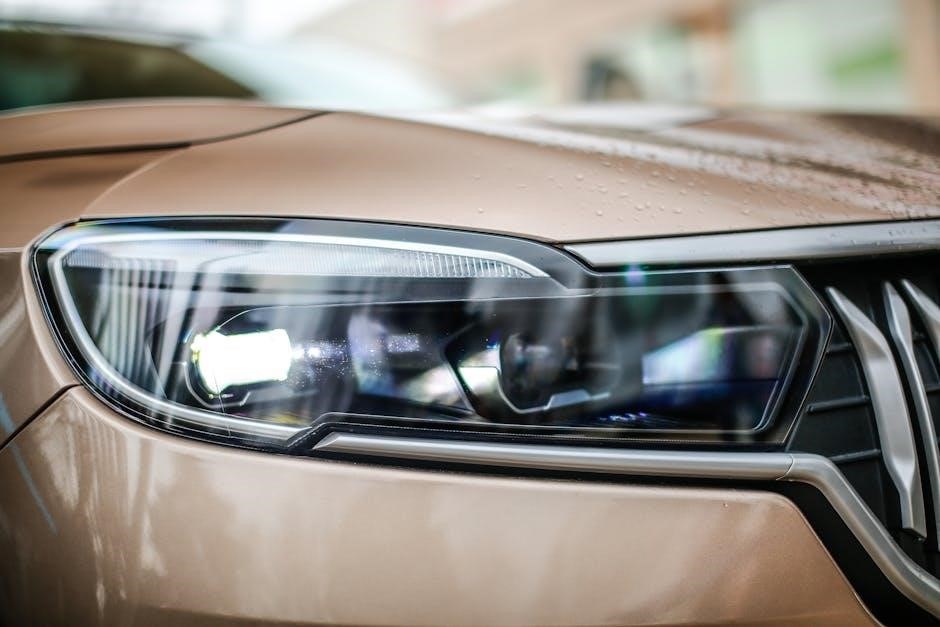
Specific Headlight Malfunctions
Identifying specific issues – whether complete darkness, a single failed light, or dimming – is key to targeted troubleshooting and effective repair solutions.
Headlights Not Working At All
Complete headlight failure is a serious safety concern, demanding immediate attention. Begin by checking the bulb for visible damage – corrosion, cracks, or discoloration can indicate a need for replacement. If the bulb appears intact, inspect the bulb connector, ensuring a tight and secure connection to the socket; a loose connection prevents proper function.
Next, verify headlight fuse integrity. Consult your owner’s manual to locate the correct fuse for your low beam headlights. Remove the fuse and visually inspect it for breaks in the filament. A blown fuse indicates an electrical overload and requires replacement with a fuse of the same amperage. If fuses repeatedly blow, a short circuit exists, necessitating professional diagnosis.
Electrical issues, such as a faulty relay or headlight switch, can also cause total headlight failure. A multimeter can be used testing for voltage at the wiring harness to pinpoint electrical disruptions. If no voltage is present, further investigation into the relay and switch is required.
One Headlight Not Working
When only one headlight functions, a systematic approach is crucial. Start by confirming the non-working bulb isn’t simply burned out; check the bulb for damage – look for discoloration or filament breaks. If the bulb appears good, meticulously inspect the bulb connector, ensuring a firm and secure attachment. A slightly loose connection can prevent illumination.
Proceed to verify headlight fuse integrity. Your owner’s manual will detail the fuse location. Remove and visually inspect the fuse for any breaks. While less common, a faulty fuse can affect only one headlight. If the fuse is intact, the issue likely lies within the wiring or electrical components.
Testing for voltage at the wiring harness of the non-functioning headlight is essential. A lack of voltage suggests a problem with the relay, switch, or wiring. If voltage is present, the bulb or its socket is likely the culprit. Consider seeking professional help for complex electrical diagnostics.
Headlights Dimming with Engine Speed
Headlights dimming with engine speed often indicates a voltage regulation issue or a problem with the charging system. This symptom suggests the alternator isn’t consistently providing sufficient power to maintain headlight brightness, especially when the engine’s electrical demands increase with RPM.
Begin with a battery voltage testing; a healthy battery should read 12.6V when the engine is off and 13.7-14.7V when running. Low voltage readings point to a failing battery or alternator. Understanding electrical system load is also key – excessive accessory use can exacerbate the problem.
Inspect the alternator connections for corrosion or looseness. A faulty alternator or voltage regulator can cause fluctuating voltage, leading to dimming headlights; If the issue persists, it’s crucial to seek professional help for a comprehensive electrical system diagnosis and repair, as this could indicate a more serious underlying problem.

Advanced Troubleshooting & Repair
Complex headlight issues require detailed electrical system analysis, including battery and alternator testing, and potentially, professional diagnostics for accurate resolution.
Battery Voltage Testing
Assessing battery health is crucial when diagnosing headlight problems, as insufficient voltage can cause dimming or complete failure. A multimeter is essential for this process. With the engine off, a fully charged battery should read approximately 12.6 volts.
If the reading is significantly lower, the battery may be discharged or failing. Next, start the engine and check the voltage again; it should rise to between 13.7 and 14.7 volts, indicating the alternator is properly charging the battery.
Low voltage while running suggests an alternator issue. Dimming headlights that brighten with engine acceleration, as noted by Coventry Motors, are a strong indicator of a voltage drop related to the battery or charging system. Remember, consistent voltage is vital for optimal headlight performance and overall electrical system stability.
Understanding Electrical System Load
Electrical system load significantly impacts headlight performance. Modern vehicles have numerous electrical components drawing power simultaneously – from the infotainment system to the power steering. When the electrical load increases, it can strain the system, leading to voltage drops and affecting headlight brightness.
This is particularly noticeable when idling, as the alternator may struggle to keep up with demand. Coventry Motors highlights that headlights dimming with engine speed can indicate such a load issue.
Consider what other accessories are running when testing headlights. Excessive load can mimic other problems, so isolating the issue is key. A properly functioning electrical system maintains consistent voltage despite increased demand, ensuring optimal headlight illumination. Understanding this interplay is vital for accurate troubleshooting.
When to Seek Professional Help
Diagnosing headlight issues can become complex, and attempting repairs beyond your skillset can cause further damage. If initial checks – bulbs, fuses, and connectors – don’t resolve the problem, it’s time to consult a qualified mechanic.
Electrical problems, especially those involving the wiring harness or relays, require specialized tools and knowledge. Hawkglow suggests a professional inspection if a new bulb still fails to illuminate.

Furthermore, if you suspect a deeper electrical system fault, such as a failing alternator or a problem with the vehicle’s computer, professional diagnostics are essential. Don’t hesitate to seek expert assistance to ensure safe and effective repairs, preventing potential safety hazards and costly complications.

Preventative Maintenance
Regular headlight inspections and choosing quality bulbs, like those detailed by Hawkglow, extend system life and ensure optimal visibility, preventing future failures.
Choosing the Right Headlight Bulbs
Selecting the correct headlight bulbs is crucial for both performance and safety. As Hawkglow emphasizes, utilizing a guide to “What Headlights Fit My Car?” ensures compatibility and avoids incorrect installations that could lead to malfunctions. Different bulb types – halogen, LED, and HID – offer varying levels of brightness and longevity.
Consider your vehicle’s specifications and driving conditions when making a choice. Upgrading to brighter bulbs can improve visibility, especially during nighttime driving or inclement weather. However, ensure the chosen bulbs comply with local regulations regarding brightness and color temperature. Incorrectly installed or incompatible bulbs can strain the electrical system, potentially causing fuse failures or even damaging the headlight switch;
Prioritize quality brands known for reliability and consistent performance. Regularly checking bulb condition and replacing them proactively, rather than waiting for them to burn out, contributes to a safer and more dependable headlight system.
Regular Headlight Inspection
Proactive headlight inspection is a cornerstone of preventative maintenance, minimizing the risk of unexpected failures. As highlighted by multiple sources, a key initial step is to “check the bulb for damage,” looking for corrosion, cracks, or discoloration – indicators of impending failure. This visual assessment should be part of routine vehicle checks.
Beyond the bulbs themselves, inspect the lens for cracks or clouding, which can significantly reduce light output. Ensure the headlight housings are securely mounted and properly aligned to maintain optimal beam direction. Regularly verify the functionality of both high and low beams, and check for any dimming or flickering.
Don’t overlook the connections; a loose bulb connector, as noted, can prevent proper function. Consistent inspection, combined with referencing your owner’s manual for specific maintenance schedules, will help ensure a reliable and safe headlight system.



Leave a Reply
You must be logged in to post a comment.